Thursday, February 28, 2008

Wilderness


What is the wilderness? Is it a place? A construction of our imagination? In The bear the wilderness is defining for Isaac. It is in a sense a powerful force that without he would have never truly become a man. By ‘overcoming’ this wilderness or some how allowing himself to be lost with it was critical to Isaac’s formation of character. Here again we are brought back to the elements of nature. There is something to allowing oneself to be engulfed by something that is unknown and unfamiliar, a place made of entirely natural elements with no human touch. It is here where God is found, and thus it is here where the core of oneself is found. It is one place where the soul can be put in perspective among the majesty of creation.

Tuesday, February 26, 2008

The Bear

The Bear approaches many deep themes. One of which is man verses nature. It reveals mans desire to constantly have control over their lives. This innate pride that lies with in man, a result of sin, is challenged when the elements of nature strip man of his ability to control his existence. Death, being the ultimate natural event that leads man to question his ability to control his own world. Are we truly able to control our path? We were created by an omniscient God who is all-powerful. He has given us free will, but ultimately we all will leave this earth through death. What is the significance of death?

Thursday, February 21, 2008

Janie


Experience is one key element that brings about ones maturity and coming of age. This element is what I would highlight in this novel as we look at it as a bildungsroman. Janie at the beginning of the novel is very sheltered by her grandmother and then by Logan. When she makes the decision to leave with Jody and subsequently with Tea Cake she enters experiences she would have never had while sheltered under her grandmother. In part the process of maturity comes when one takes risks and steps out into the reality of the world, as Janie does. It is through trial and error that Janie begins to form her identity. The climax of this formation occurs during the storm when Janie realizes that she is not in control of life and death, this realization brings Janie to a peak in her discovery of self. I do see this novel as a bildungsroman, due to the depth of character we form within Janie as the novel progresses. The author lets us journey with Janie through tough life experiences that help her form her sense of self in the world.

Tuesday, February 19, 2008

The Hurricane


They sat in company with the others . . . They seemed to be staring at the dark, but their eyes were watching God. -Chapter 18
It is within this quote and the surrounding chapter that we find the climax of the novel. Laced throughout the novel is the presence of a struggle with unseen forces. Janie, a black rural woman from the south, is forced by her status to live in a world, which by its nature ostracizes her. Janie is unable to change the forces that surround her. This struggle is painted symbolically as we watch Janie and Tea Cake fight for survival amidst the hurricane. Neither can control the storm but must learn to survive within it. Janie is unable to control the ‘storm’ constantly raging around her but she must decide how to live within it. Janie does not see suffering in a negative light but instead she realizes that through endurance and acceptance of the bad with the good one is truly able to experience the fullness of life. This concept of struggle against the unseen, this idea of human nature when compared to God leads to the powerful title given to the book.

Tuesday, February 12, 2008

There Eyes were Watching God #1


To Janie Stark, a beautiful young African American woman growing up after the Civil War, love in marriage is vital. After her experience under the pear tree she becomes frustrated by her mothers decision to make her marry Logan due to the stability he offers. Yet Janie never comes to love him, and so she leaves him for a passionate traveler. The stark contrast in the two marriages reveal the different views of the purpose of marriage and how, with the move toward a more free society, these views change. Nanny’s decision for Janie was due to her love for her and hopes that she would live better, due to the security offered by Logan. Marriage in this sense was used to move your family up in society. Janie, more independent growing up then Nanny, wishes to marry for love, caring little about stability. This shift is portrayed today, as marriage in America is no longer arranged. This transition can also be seen as countries around the world; specifically Muslim countries are slowly allowing their people more independence.

Lucy and the Window


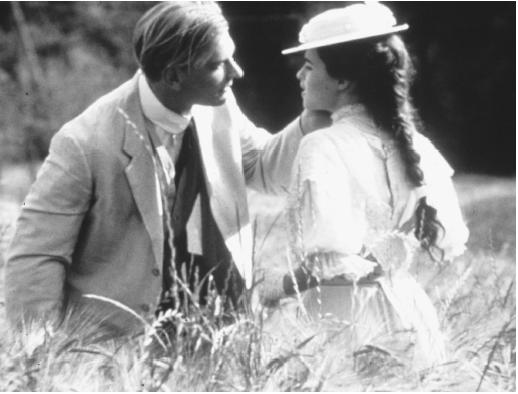
Lucy changes dramatically from the beginning of the novel. At the beginning of the story we find Lucy ‘trapped’ in a room without a view. When a room with a view is offered and her Aunt is finally convinced to allow her to move in to it Lucy gets to ‘see’ out into society for the first time. The novel then walks along side Lucy as she wrestles with weather or not to climb out the window and join society. Countless episodes draw Lucy out of the Window for a time, each event causing more growth as her understanding of the world around her broadens. Her initial journey out of her window left her faint at the sight of death, and elated at her walk with George. Symbolically each time she ‘climbs’ out of the ‘window’ she journeys a bit farther away from the ‘safety’ it offers. The kiss in the violets and seeing George swimming nude were both times in which she traveled far from the window of society. Eventually she decides to leave the window as she elopes with George. Thus Lucy is a good example of a Blugersoman for we watch her grow and change dynamically throughout the novel.

Monday, February 4, 2008

A room with a view #1


Lucy represents woman’s struggle to receive freedom from the oppression of society. The irony laced throughout the novel reveals the true social norms that held woman bound to rules and silly norms. Two key examples of this irony come both during the discussion of changing rooms when the Emersions enter the story and again when Charlotte argues over paying the cab fair. The face/words that is given is a mask to cover true desires and feelings. It is a society caught up in a mesh of having to present oneself in a certain way in every situation. Lucy is not allowed to form her own identity by society but unlike other woman who allow their identity form secretly or allow their identity to mold into the definition society has drawn, Lucy allows her independent identity begin to show and shine through the mask of society.